
Free handbook for parents
Find out what your child needs from you, from their birthday, in 30 seconds.
Get my free handbook. Calculate your child's Heartprint, find their number, and see the need behind the behavior you keep running into.
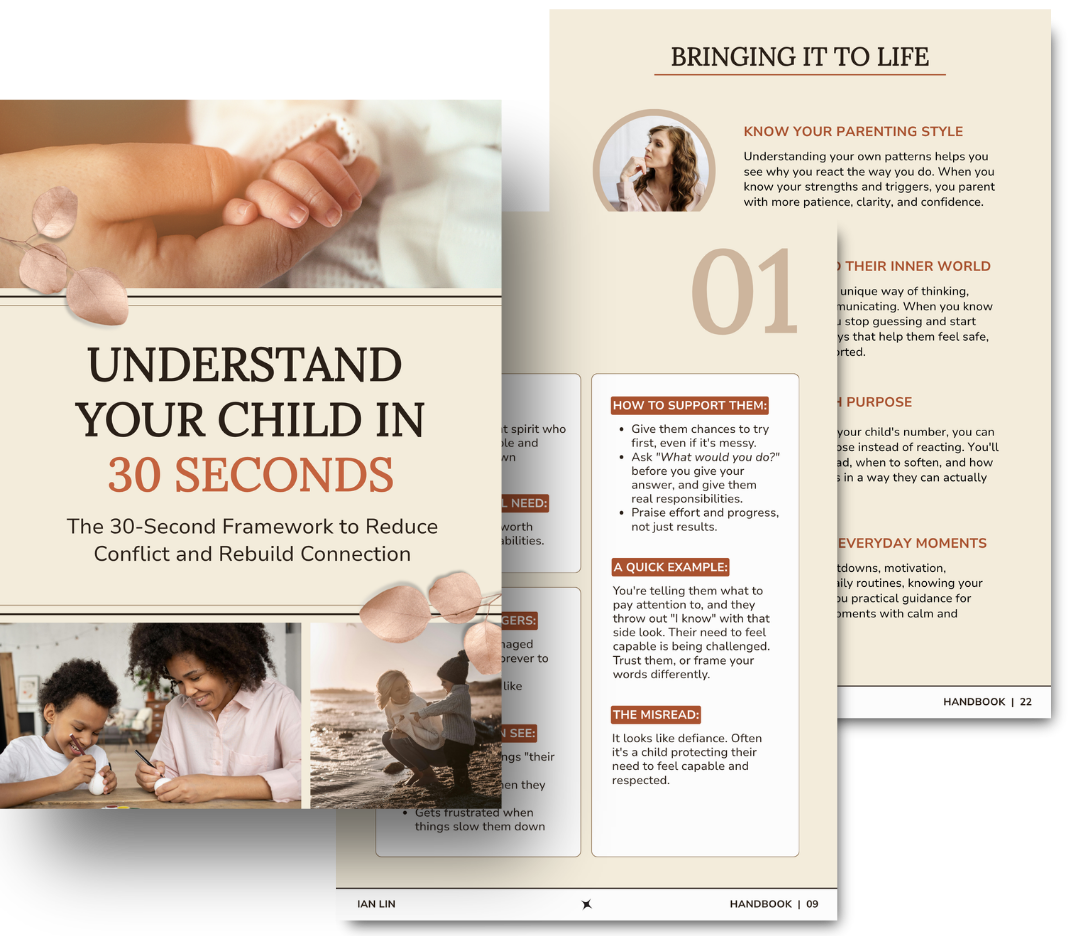
Understand Your Child in 30 Seconds
First name
Free · Instant access · First name and Email only
"First time seeing your content.
There is so much here that I can use."
A mom of two on Facebook
Free handbook for parents
Find out what your child needs from you, from their birthday, in 30 seconds.
Get my free handbook. Calculate your child's Heartprint, find their number, and see the need behind the behavior you keep running into.
Understand Your Child in 30 Seconds
First name
Free · Instant access · First name and Email only
"First time seeing your content. There is so much here that I can use."
A mom of two on Facebook
Try it now
Find your child's number in 30 seconds.
Enter their birthday, and I'll show you their chart and the number at the top.

Try it now
Find your child's
number in 30 seconds.
Enter their birthday, and I'll show you their chart and the number at the top.
You love your child. Some moments
still end the same way.

The "I know, I know." The meltdown when a plan changes. The door that closes the second you try to correct something.
You've read the advice. You've tried explaining it differently. You've worked on staying calm. Some of it helped. Some of it just didn't fit your child.
Most parenting struggles are not a love problem. It's an understanding problem.
Every child is born needing something a little different. That's why a tip that works for one child can backfire with another. The Heartprint shows you what your child needs, starting from their birthday.
You love your child.
Some moments still end the same way.
The "I know, I know." The meltdown when a plan changes. The door that closes the second you try to correct something.
You've read the advice. You've tried explaining it differently. You've worked on staying calm. Some of it helped. Some of it just didn't fit your child.
Most parenting struggles are not a love problem. It's an understanding problem.
Every child is born needing something a little different. That's why a tip that works for one child can backfire with another. The Heartprint shows you what your child needs, starting from their birthday.
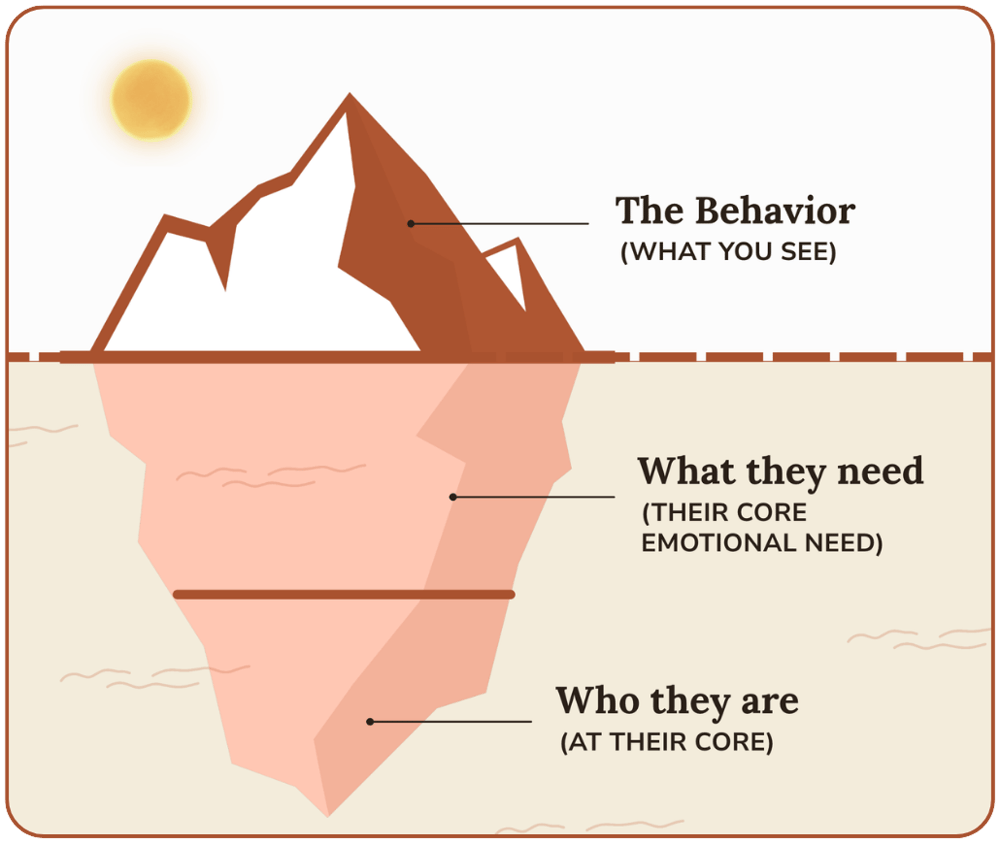
What you see is only the tip of the iceberg.
When your child melts down, rolls their eyes or goes quiet, that's the behavior. It's the part above the water. What's driving it sits underneath, where you can't see it. There's always a reason.
Every child has core emotional needs. Think of it like hunger. When we're hungry and don't eat, we get "hangry." Kids work the same way. When their need isn't met, it shows up as behavior.
Most parenting advice works on the part above the water. I start underneath, with the need.
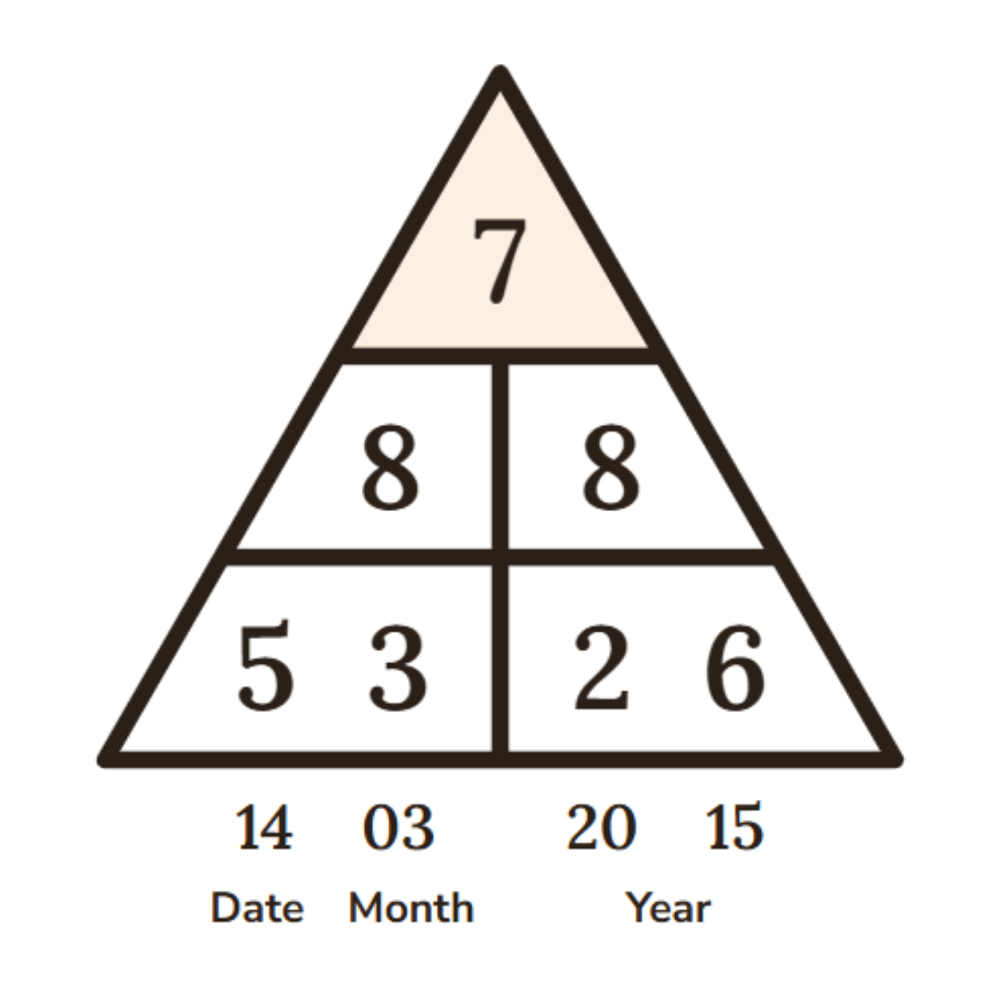
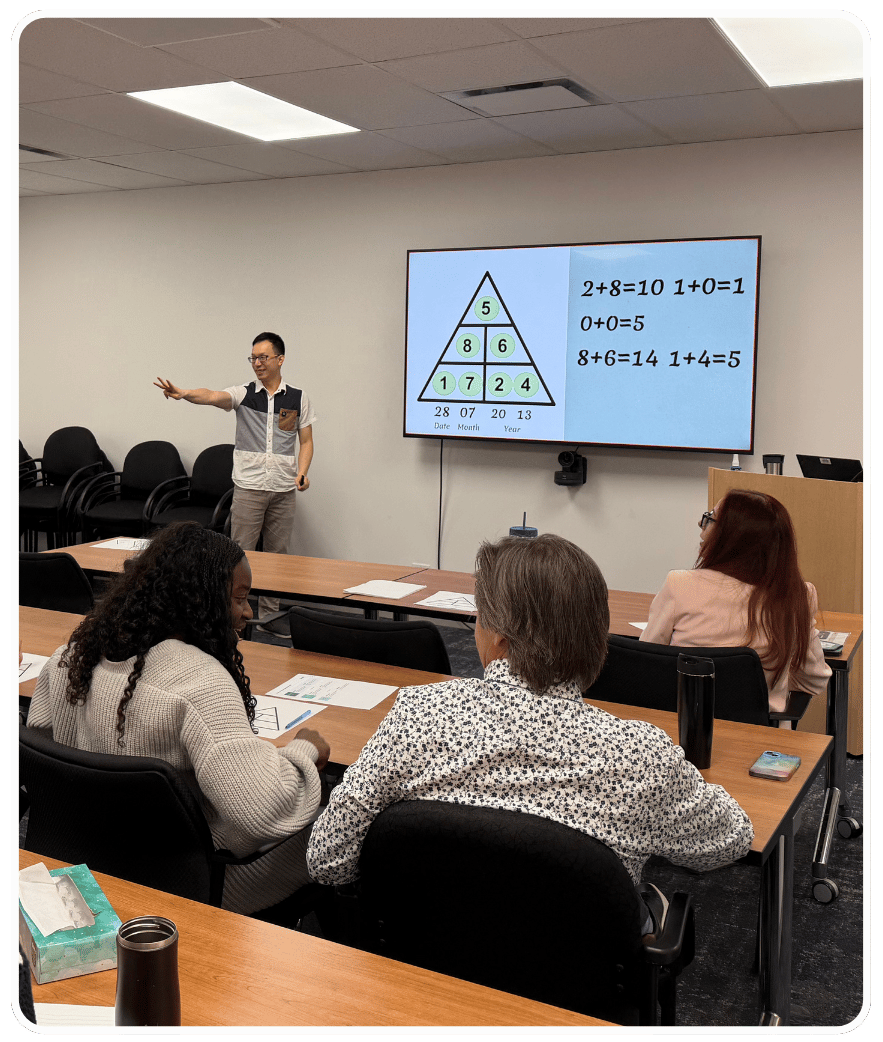
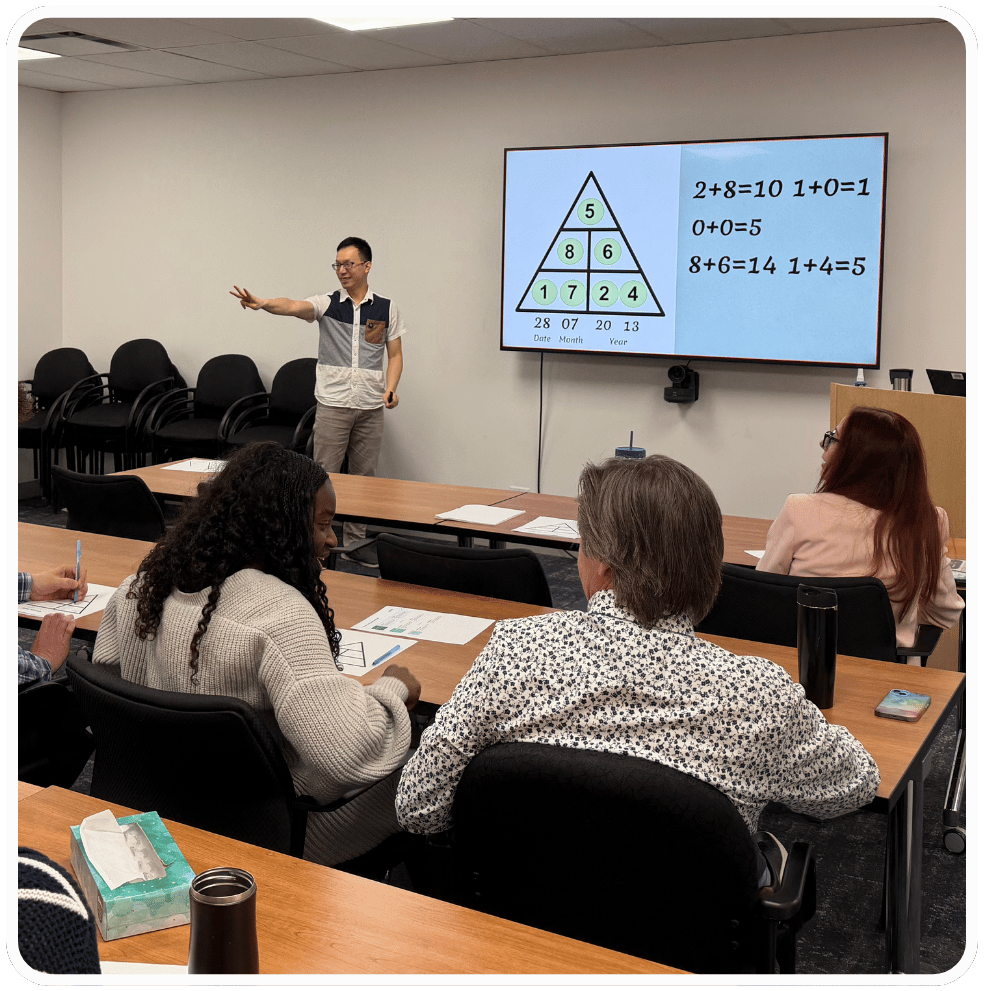
Your child's birthday gives you a chart of seven numbers. I call it their Heartprint. The number at the top is their core number, about 60% of who they are. That's where the handbook starts.
Every number in the chart comes down to a single digit, from 1 to 9. That's why there are nine numbers: each one is a different personality type, with its own needs and its own triggers.

month and year.
30 seconds. No app needed.

sets them off, and how to support them.
Then compare it with what you see at home. The chart is a starting point, not a label or a prediction.
Is this astrology?
No, it isn't fortune-telling. The birthday is just where we start, and everything
after that is psychology. It's a behavioral framework I learned in Taiwan, built on
ideas like Virginia Satir's iceberg and the Johari Window. It isn't about
predicting anything or putting your child in a box.
What you see is only the tip of the iceberg.
When your child melts down, rolls their eyes or goes quiet, that's the behavior. It's the part above the water. What's driving it sits underneath, where you can't see it. There's always a reason.
Every child has core emotional needs. Think of it like hunger. When we're hungry and don't eat, we get "hangry." Kids work the same way. When their need isn't met, it shows up as behavior.
Most parenting advice works on the part above the water. I start underneath, with the need.
Your child's birthday gives you a chart of seven numbers. I call it their Heartprint. The number at the top is their core number, about 60% of who they are. That's where the handbook starts.
Every number in the chart comes down to a single digit, from 1 to 9. That's why there are nine numbers: each one is a different personality type, with its own needs and its own triggers.
Then compare it with what you see at home. The chart is a starting point, not a label or a prediction.
Is this astrology?
No, it isn't fortune-telling. The birthday is just where we start, and everything after that is psychology. It's a behavioral framework I learned in Taiwan, built on ideas like Virginia Satir's iceberg and the Johari Window. It isn't about predicting anything or putting your child in a box.
From the comments on my videos
What parents are telling me


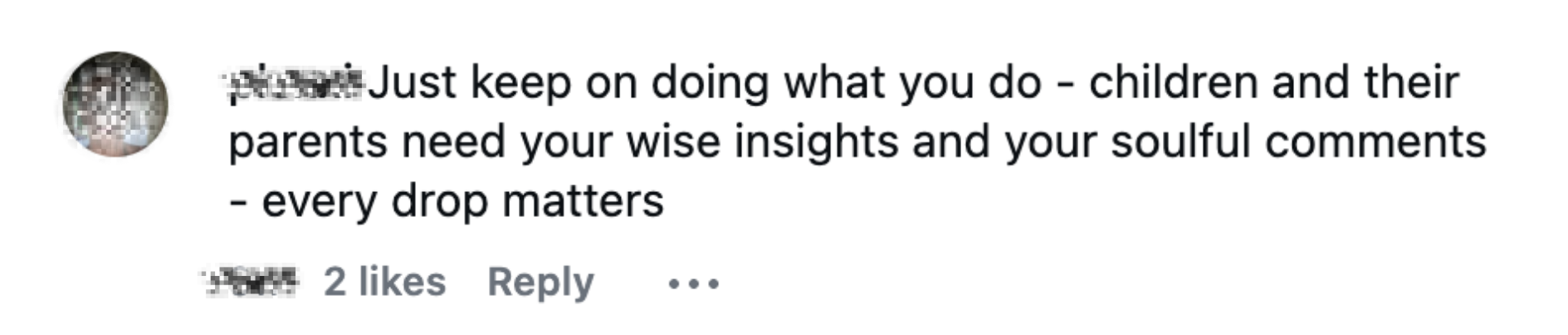



"Reading the handbook, I kept stopping and thinking, 'Wait, is this real? This is so true.' My daughters are a 1 and a 6. The 'I know, I know'? That's my 1. And my 6 needs to get something perfect before she'll even try. Now I understand why, and I'm getting to know them both in a new way as their mom."
Rose · Entrepreneur and mom of two
What it looks like at home
"My youngest made so much sense after learning about her inner 5. She resists everything, and I used to keep trying to reason with her... which only escalated things. Recently, when she refused lunch and demanded noodles, I stopped trying to convince her into eating. I calmly explained once that lunch was already prepared and we could have noodles for dinner, then I stepped back. She eventually chose to eat on her own."
Fanny L. · TCM doctor and mom of two
From the comments on my videos
What parents are
telling me





"Reading the handbook, I kept stopping and thinking, 'Wait, is this real? This is so true.' My daughters are a 1 and a 6. The 'I know, I know'? That's my 1. And my 6 needs to get something perfect before she'll even try. Now I understand why, and I'm getting to know them both in a new way as their mom."
Rose · Entrepreneur and mom of two
What it looks like at home
"My youngest made so much sense after learning about her inner 5. She resists everything, and I used to keep trying to reason with her... which only escalated things. Recently, when she refused lunch and demanded noodles, I stopped trying to convince her into eating. I calmly explained once that lunch was already prepared and we could have noodles for dinner, then I stepped back. She eventually chose to eat on her own."
Fanny L. · TCM doctor and mom of two
What's inside the handbook
The 30-second calculation.
Step by step, with a worked example.

A page for each of the 9 numbers.
Who they are, their need, what sets them off, and how to support them.

"The misread."
What a behavior looks like, and what's really going on underneath.
Your own number.
How your wiring shapes the way you parent.
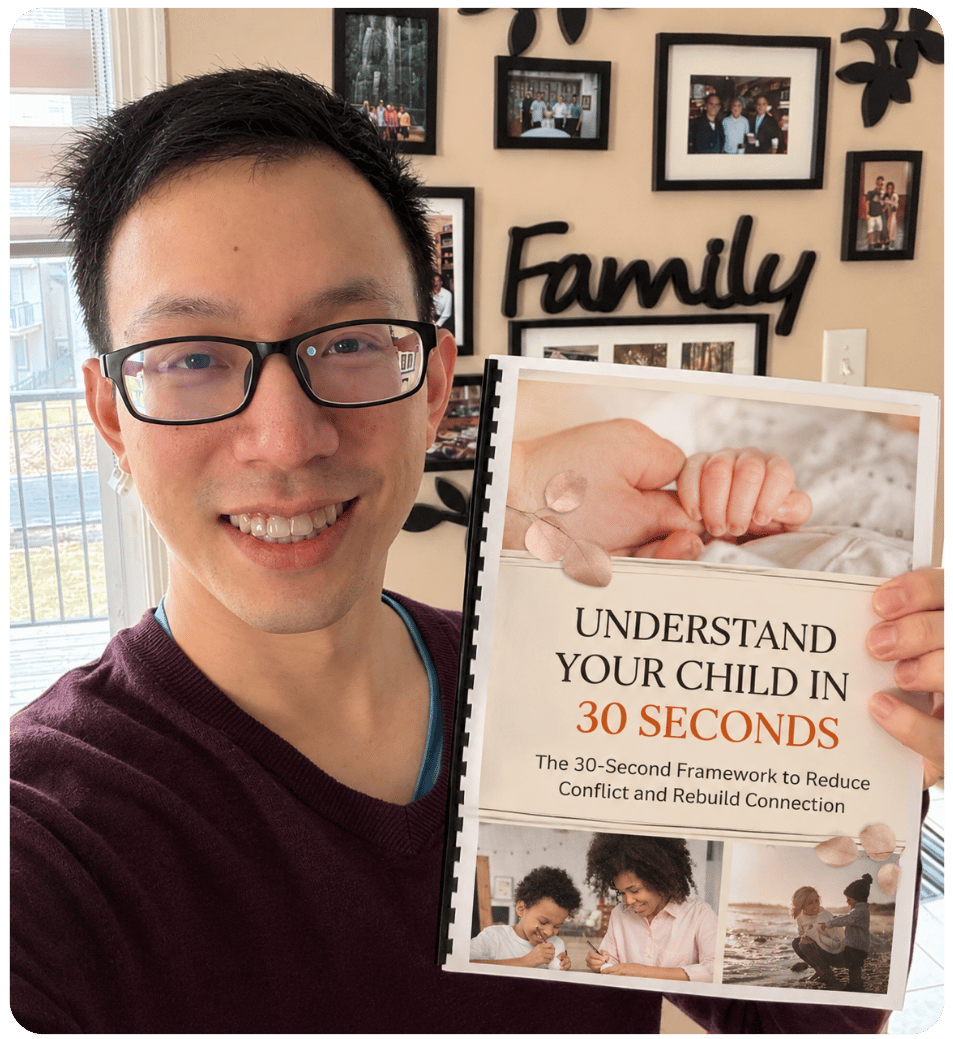
What's inside the
handbook
The 30-second calculation. Step by step, with a worked example.
A page for each of the 9 numbers. Who they are, their need, what sets them off, and how to support them.
"The misread." What a behavior looks like, and what's really going on underneath.
Your own number. How your wiring shapes the way you parent.
Hi, I'm Ian
I grew up in a house full of love, and
still didn't feel understood.
My parents worked themselves to the bone for us. I could tell they loved me, and it still didn't feel like they understood me.
Then I found this framework in Taiwan, and my whole family started to make sense. It felt like someone had handed me a map.
Today I share it with parents through Serenes Academy and my short videos. 245,000+ of you follow along on Facebook and Instagram.
I'm a 5, by the way. The most stubborn number. So if your child is a 5, I get it.
No child should feel invisible, and no parent should feel helpless.
Hi, I'm Ian
I grew up in a house full of love, and still didn't feel understood.
My parents worked themselves to the bone for us. I could tell they loved me, and it still didn't feel like they understood me.
Then I found this framework in Taiwan, and my whole family started to make sense. It felt like someone had handed me a map.
Today I share it with parents through Serenes Academy and my short videos. 245,000+ of you follow along on Facebook and Instagram.
I'm a 5, by the way. The most stubborn number. So if your child is a 5, I get it.
No child should feel invisible, and no parent should feel helpless.
This handbook is for you if...


It may not be what you're looking for if you need a script to stop a behavior
tonight or a guaranteed fix. Number Psychology is a way to understand
personality. It isn't a clinical assessment, and it doesn't replace professional
help when your child needs it.
Questions parents ask me
Does it work if my child is younger than 8 or older than 12?
The calculation works at any age. I wrote the handbook with 8 to 12 year olds in mind. With teens it still works; change just takes a little longer.
What if my child's number doesn't sound like them?
That happens, and it doesn't mean the chart is wrong. The top number is about 60% of who your child is, and the other numbers in the chart change how it shows up. Read "the misread" on their page, then notice your child for a week before you decide.
Do I need to know anything first?
Not at all. The handbook walks you through it step by step, in plain language.
I've already read lots of parenting books. What will this add?
You don't have to set aside what you've learned. The Heartprint gives you another way to see what your child needs and what sets them off, so you can tell which of it fits your child.
Will I have to buy something?
No. The handbook is free. After you sign up, you'll see an optional course that helps you use it at home. Your handbook comes either way.
Will you email me?
Yes. I'll send your handbook, then a few emails with simple ways to use it at home. You can unsubscribe anytime.
This handbook is for you if...

It may not be what you're looking for if you need a script to stop a behavior tonight or a guaranteed fix. Number Psychology is a way to understand personality. It isn't a clinical assessment, and it doesn't replace professional help when your child needs it.
Questions parents ask me
Does it work if my child is younger than 8 or older than 12?
The calculation works at any age. I wrote the handbook with 8 to 12 year olds in mind. With teens it still works; change just takes a little longer.
What if my child's number doesn't sound like them?
That happens, and it doesn't mean the chart is wrong. The top number is about 60% of who your child is, and the other numbers in the chart change how it shows up. Read "the misread" on their page, then notice your child for a week before you decide.
Do I need to know anything first?
Not at all. The handbook walks you through it step by step, in plain language.
I've already read lots of parenting books. What will this add?
You don't have to set aside what you've learned. The Heartprint gives you another way to see what your child needs and what sets them off, so you can tell which of it fits your child.
Will I have to buy something?
No. The handbook is free. After you sign up, you'll see an optional course that helps you use it at home. Your handbook comes either way.
Will you email me?
Yes. I'll send your handbook, then a few emails with simple ways to use it at home. You can unsubscribe anytime.
Get your free handbook
Enter your first name and email, and I'll send Understand Your Child in 30 Seconds straight
to your inbox. Read it at your own pace, with your child's birthday at hand.
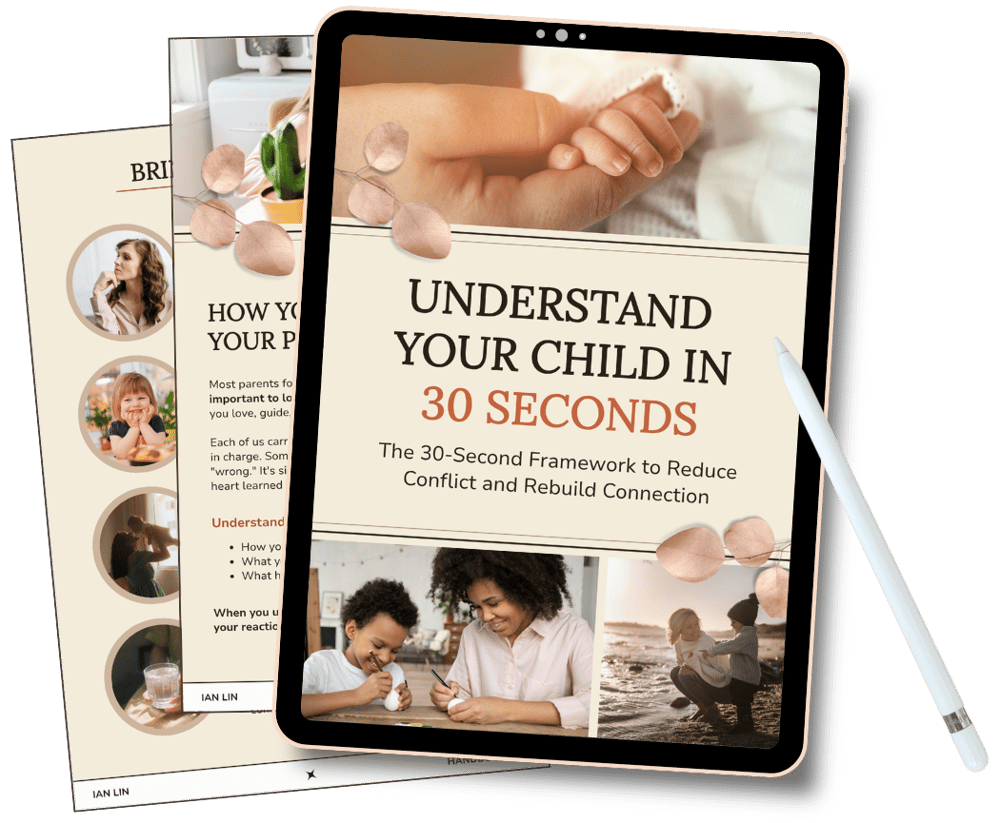
Get your free handbook
Enter your first name and email, and I'll send Understand Your Child in 30 Seconds straight to your inbox. Read it at your own pace, with your child's birthday at hand.
Questions? We're here to help.
Email support@ian-lin.com. We aim to respond
within 48 to 72 hours.
This handbook provides general educational guidance for parents interested in understanding their child's personality and behavior through Number Psychology. It is not a clinical assessment and does not replace advice from a licensed therapist, counselor, or medical professional.
Serenes Academy, founded by Ian Lin. Helping parents understand the child in front of them.
Privacy Policy · Terms of Service
© 2026 Serenes Academy. All Rights Reserved.
Questions?
We're here to help.
Email support@ian-lin.com. We aim to
respond within 48 to 72 hours.
This handbook provides general educational guidance for parents interested in understanding their child's personality and behavior through Number Psychology. It is not a clinical assessment and does not replace advice from a licensed therapist, counselor, or medical professional.
Serenes Academy, founded by Ian Lin. Helping parents understand the child in front of them.
Privacy Policy · Terms of Service
© 2026 Serenes Academy. All Rights Reserved.